Layers of discontent

All the things that happen to us produce an emotional response. Thankfully, emotions move through us if they are allowed to be expressed.  If emotions cannot be expressed they are stored in the psyche. The long term implications of these simple and obvious facts are critical to human stability.

To elaborate, if we lose someone we love then we become sad, if we are allowed to mourn, then the sadness eventually passes. If someone hurts us, we become angry, and if we are allowed to protest against the violation (hopefully appropriately and in a way that our protest is heard and respected) then the anger dissipates. The exact type and intensity of emotional response to given events will vary depending on different personalities and their psychological history, but emotional responses cannot be avoided.

If (for whatever reason) the normal function of emotional response and subsequent expression is inhibited, unprocessed emotions will lay themselves down in the psychic bedrock in layers upon layers upon layers, all filled with potential energy. And one day, when it gets hot enough, they will blow through a crack into consciousness. This eruption almost always wreaks havoc and is usually a great surprise to everyone.

So, it follows that we should think twice before we tell ourselves and others (especially our children) that we must “get over it”; that things are “not so bad”; that we must “stop crying”; that we must put “a lid on it”; that we should stop “throwing a tantrum”. We need to stop preventing emotional expression either through unspoken disapproval, or explicit prohibition. Little meltdowns every now and then are preferable to a major eruption that destroys everything in its path. And interestingly, the more we are allowed to have our true emotions and are supported through their expression early on, the better we become at managing them constructively later in life.

The problem with deep work

I have devoted my life (consciously and unconsciously) to working at a deep level with individuals and groups. Specifically, I have tried to bring the ideas of depth psychology to the general public, through teaching and writing. I have believed, fervently, that a little bit of psychological knowledge can go a long way. For example, I nurtured the naive belief that if only people knew that they were using a defense mechanism, then they would stop doing so and relating to them would become much easier. Now, this is true, in theory, and occasionally in practice.

However, there are some significant difficulties associated with such a firmly held set of convictions. If looking at our deep self was simple, everyone would be doing it. If it was so obviously rewarding, then more therapists trained in working with unconscious processes would be wealthy. Most of them are not. As Rod Anderson (therapist of note) recently pointed out to me, Jung apparently said something to the effect that 20% of one’s work on the self can be provided by the therapist in terms of insight, the rest is endurance and  action which can only be done by the individual him or herself. Also, deep work (again according to Rod), helps to unleash deep truths and can in fact call one’s entire life into question. Unleashing deep truths can be explosive, and so everything becomes disrupted when one does the deep archaeology on the self. For example, if I discovered that my career choice was based on managing a deep-seated wound, what happens to me when that wound starts healing? Becoming less neurotic can throw the cat amongst the emotional pigeons on a fairly ongoing basis.

Also, a therapeutic intervention will feel very enlightening at the start – there is a real honeymoon period. The first few insights are often quite groundbreaking. If one adds the fact that the first few conversations with a compassionate person with insight can be deeply reassuring and compelling, then the early phase of a journey inside the self can feel rather good. However, at some point, it will start feeling rather difficult, as all the old painful feelings have to be faced, and even the compassion of the therapist does not provide sufficient comfort. At that point, it is easy to become profoundly disappointed in the deep work itself, as well as in the person who may be the catalyst and / or supporter along the way.

So, I still believe that deep work provides the greatest freedom for the individual in the long run, but it takes an extraordinary capacity to delay gratification in order to walk that torturous road. And, it takes a great deal of faith in a mysterious and intangible process to keep going. I hold the faith, but it is sometimes a thankless task when trying to convert the world at large. But I have to keep holding the faith of the benefits of depth work, because how else do I justify a life time of decisions and actions?

Vision for 2012: Depth Leadership

About 7 years ago I had a dream that felt significant, although I did not understand its significance at the time. I dreamt that scientists in South America had discovered a flower that had never been seen before, a flower that had a self-organising principle that was entirely new. I could see the flower in the dream, but not clearly.

A year or two later, I travelled to South America for the first time on my way to Antarctica. I was travelling alone and when I landed in Buenos Aires, the taxi driver suggested that he drives me around the city to see some of the attractions. He asked me whether I had seen “the flower”. Of course I had not. He drove me to a huge metal flower standing in a pool of water.  Architect Eduardo Catalano had made it as a gift to the city. Catalano named it the Floralis Genérica, which means a flower that represents all the flowers in the world. The sculpture has petals that open and close depending on the time of day and the wind conditions. Apparently Catalano said something to the effect that the flower is a synthesis of all flowers and is a hope that is reborn every day (the quote in Wikipedia is not completely clear).

I did not know what to make of all of this at the time. I went on to Antarctica and had a wonderful time. I eventually wrote my book Beneath – Exploring the Unconscious in Individuals and it was published in 2011. Last year I also completed a rewrite of my first published book The Depth Facilitator’s Handbook from the perspective of leadership, and so named (a little obviously) Depth Leadership. I have not taken Depth Leadership to publication because it has not felt ready. In the last quarter of 2011, I started formulating a vision which I called Beneath, Between and Beyond.

This morning some pieces in my mind finally connected with one another. The new self-organising principle that I have been looking for has been right under my nose. In summary, I realised that I believe that I, and anyone that has an impact on the world, have a moral duty to pursue an approach that I call “depth leadership”. Broadly speaking this means that we actively work “beneath” (with our unconscious selves), “between” (with our communities) and “beyond” (with the natural environment), always considering our impact on the delicate balances in these complex systems, and thereby taking care to ensure that they thrive. We have to keep our attention on all three simultaneously and do whatever it takes to resolve the tensions and dilemmas between them. Anything less will be shortsighted. That is what I will be working towards in all my endeavours in 2012.

Home

It has been awhile since my last post. I have been busy orchestrating a very important transition which I finally completed tonight. Three and a half years ago I left Prince Albert, the little Karoo town which I had made my home, in order to move back to Cape Town for practical reasons. Tonight, I returned to this small village to live. I am delighted to be HOME.

Reverence

A Sandwich Tern at Miller’s Point, Cape Town

The state of the world worries me. I spent many therapy sessions understanding that my view of the world is deeply coloured by my early experiences and so, I also try to do a reality check when I become unusually worried about the external environment. However, this time, the reality check does not really help enough. In fact, it makes me more worried. This is exacerbated by the fact that no-one really seems to know how bad things are. We know that our natural environment is buckling under the inordinate human assault on it, but we do not know exactly how our life support systems will respond to the current level of human interference.

One of the challenges seems to be the human perception of our power as a species. It seems that we have vacillated between feeling omnipotent and feeling desperately powerless. Perhaps our illusions of omnipotence are a reaction against the utter agony of our ultimate helplessness in the scheme of  things. I feel myself torn between the two states myself. I try to ease my  anxiety by imagining that we as humans will make a plan to ensure our survival.  We have so much technology at our disposal. And then I think about how, once we  have destroyed an ecosystem, how even attempts at rehabilitation tend to lead to one or more monocultures dominating. We increasingly live in a world of pigeons,  starlings, wheat, cattle, alien vegetation, battery chickens and billions of people. And then I feel completely terrified. However, something lovely occurred to me during one of these mental boxing matches. I became aware that the life process remains miraculous despite stem cell research and genetically modified foods.  For the moment, I can remain a witness to the buds in spring, and make sure I observe all the elements of the mysterious life-death-life cycle. All it requires is attention, and reverence. And somehow, that idea has helped to quiet my anxious
soul and provided guidance for action

Openheartedness

One of the most exciting phone calls I received this year was from a past MBA student of mine, a qualified anaesthetist, who had decided to return to work in public health after working in the business world for ten years. He had decided that working as an anaesthetist would more personally satisfying than being a well paid commercial executive in the pharmaceutical industry.

On the 1st of September this year, he returned to work in a large government hospital. I spoke to him after his first day and asked how it was. He had not worked as an anaesthetist for ten years, and so he imagined that he would be inducted slowly. However, he was assigned to paediatric cardiac surgery as an “observer” to an experienced anesthetist. His first patient was a 9kg baby who underwent a 4 hour open heart surgery. The second patient was 6 weeks old and only weighed 2.2kg. She also underwent cardiac surgery. Although there were other anesthetists in adjoining theatres, my ex-student was left on his own at times during each operation to manage the patients. He was understandably terrified and rattled by this but fortunately the anaesthetics and surgeries were uneventful and both patients were fine.

I am sure there are constraints and reasons why this situation happened. I am not sure if there is a solution for it though. All I am hoping is that the very system that desperately needs people like this, does not succeed in alienating him sufficiently that he loses heart and leaves again.

Travelling Beneath

Bodo (my beloved companion who mostly has the patience of Job) and
I are on our way back from the privilege of a road trip through our paradoxical
country to visit the biggest city we have, Johannesburg, and its neighbour
Tshwane (or should I still call it Pretoria?). It has been an inspiring trip.

It started with the opening night of the IMPAC film festival run by Pluto Panoussis and the Open Window school. We were exposed to the latest in exploratory film making. Some of the short films shown severely challenged my innate conservatism, but also stimulated my mind to transcend some of its well worn paths as a result of the startling imagery- for example: a man delicately stroking a barbel fish lying on a table wearing a collar (the fish, not the man) and the sound track following the contact of the finger with the fish!? Bravo Pluto for being such a pioneering and fine teacher – your film students take creativity to a new level and your guidance keeps it meaningful, although sometimes the meaning may be deeply personal.

We then had the privilege of three days in the Waterberg in the Welgevonden Game Reserve.  Although  covered in the brown coat of winter, the Waterberg shines as a relatively intact ecosystem. I know that without human intervention the lions would decimate the impala population to the brink of extinction (too many “big five” animals in too small a space), but there are butterflies galore. It was both thrilling and disturbing to come upon the 10 new teenage buffaloes being fed from cut open tyres on our way to the gate on the last morning.

We returned to the cities in order to do some work. I had some client meetings and a launch of my book Beneath in each city. I was reminded that affluent city people spend a lot of time in malls. Several times we were faced with the challenge of finding our way around unfamiliar malls and their parking lots. Our satellite navigation system was invaluable in negotiating the strangle of roads leading to the malls, but could not help us once inside the concrete boxes of our modern market places. Bodo (who has an innate sense of direction) invented creative ways of directing me as we rushed around preparing ourselves for my public appearances. I often had a sense of being a country bumpkin – not enough style or tech savvy to qualify for membership of the indefinable group that apparently thrives in this part of our complex country.

There were hard experiences:

  • Seeing the pathos of two tatty, yet still dignified elephants at the Joburg Zoo persistently curl their trunks into their inaccessible (by day) nighttime enclosure for a treat they could not quite reach.
  • Witnessing two dirty and mangy polar bears in their concrete enclosure listlessly half playing with one another.
  • Being continually surrounded and bombarded by advertising billboards and posters multiplying and enlarging in a nightmarish fashion. Billboards that proudly advertise themselves as offering in-your-face advertising (how could I miss it?!) and then having to think about my own bombardment of my network when they may feel intruded upon. We are all screaming “SEE ME, SEE ME!!!”
  • Watching the relentless and mindless destruction of habitat spreading like a cancer over the land, and knowing that at the same time the development is feeding many hungry mouths, and a good deal of greed.
  • Continually searching for the blue sky behind the brown haze.
  • Seeing the many poor and needy people at the side of the road and  more invisibly in the fragile homes of the urban sprawl and knowing that I am not able to help them.
  • Trailing my own heavy carbon footprint behind me as I went.

And yet, mostly, we encountered kindness and inspiration in a variety of forms:

  • The elderly pale faced proprietor of the men’s outfitters that sat behind his desk (defiantly smoking one cigarette after another)  berating his helpful scurrying staff members for not keeping him informed of the decision to quickly shorten my trousers for me, but who nevertheless winked and smiled at me as he gave me a discount.
  • The manager Marlize and the team at Exclusive Books (Brooklyn) who did a magnificent window display and pulled out all the stops to draw and host a great crowd for my launch of Beneath.
  • The many people who gave of their time to hear me speak about my passions and who asked meaningful questions which allowed me to display my wares (so to speak).
  • The connection with very special and longstanding friends who support me warts and all.
  • Treasured friends like Thapelo Mahlangu who went to great trouble (and risking his life while driving) to tell the world about my book and my activities.
  • The friendliness of staff at the variety of establishments that served us food and rooibos cappucino’s and the various courageous attempts at making red cappuccinos when such item was not on the menu.
  • The informative generosity of Owen Early, the book sales representative in Johannesburg who handles Beneath.
  • The woman at the beauty parlour who kindly, but bravely (and successfully) suggested an added grooming service.
  • The author (and past head of the Publications Board who was responsible for critical unbanning) who took the time to read and complement me on my book and attend my launch.
  • Candice and Marcia at Skoobs for supporting the launch of Beneath.
  • The past MBA students who connected with me in a variety of ways and reminded me of the joy of teaching and the privilege of fulfilling the role of a teacher in the world.
  • The SAB and Henley Business School team who asked Lewis Pugh to speak at the gala dinner for the delegates of their Management Development Programme and invited me and Bodo to attend.
  • Lewis Pugh, a great and compelling storyteller, who is crazy and determined enough to swim a kilometre at the North Pole in order to alert world leaders to the fact that we are causing the ice to melt at an alarming rate.
  • The women who cleaned our rooms at the various guesthouses and tidied my scattered possessions with care.
  • The people in Cape Town who kept the show on the road behind the scenes, my wonderful assistant Susan, careful and kind Samuel who brushed and walked Blackie (our remaining dog) every day, my publishing manager Dominique who keeps a watchful eye, Xavier my distributor who supported and delivered, and PR fairies Wendy and Sarah who keep me in mind when it matters.

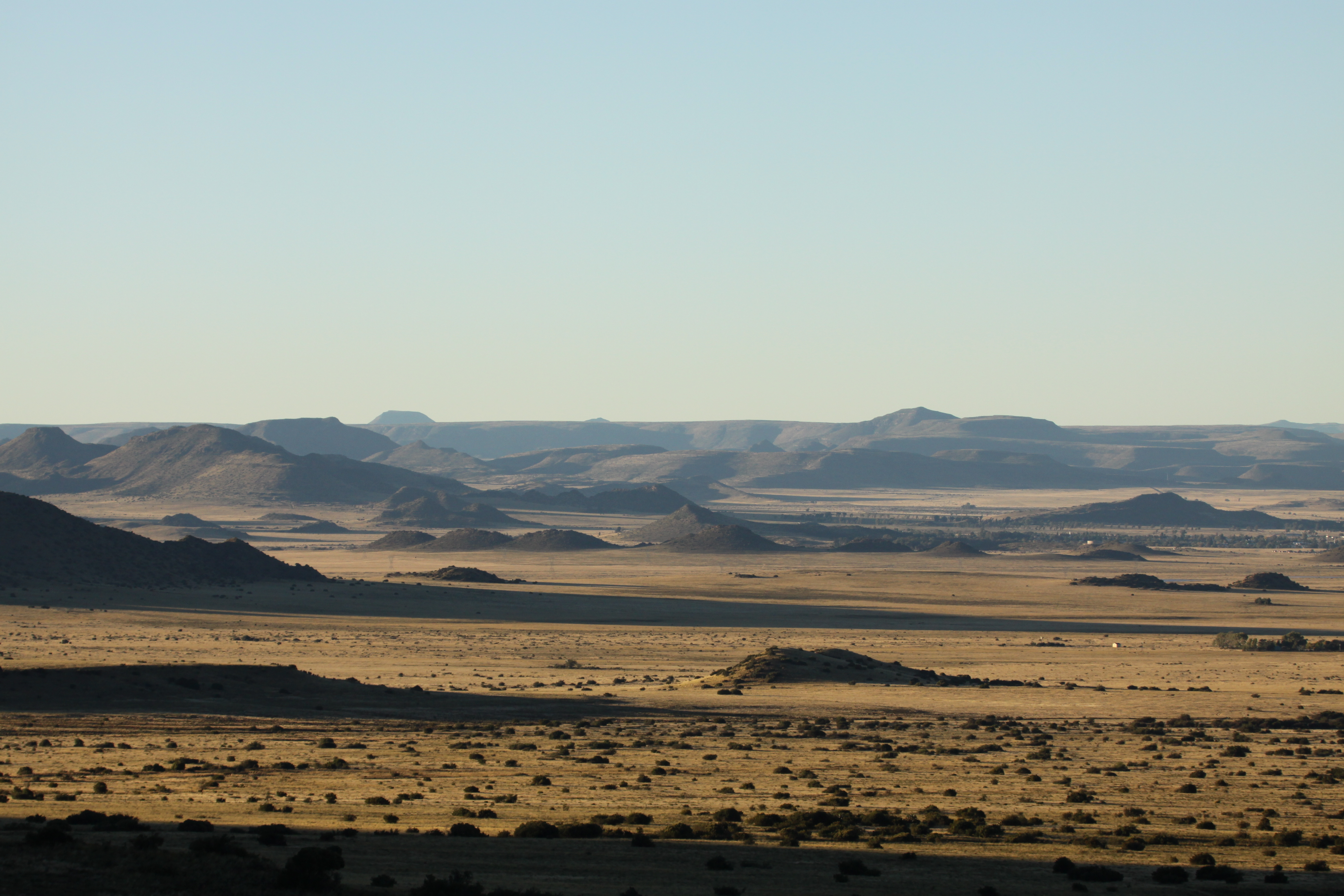
Of course, there was a lot more, but now there is the delight of the Karoo sky and the Pierneef landscapes beneath it on the way home.

The power of stories

We are on the road to Johannesburg from Cape Town driving through the beautifully barren landscapes of the Karoo. I love road trips for many reasons, but mostly because they give perspective to a life. There have been riots in London, the gold price is soaring, the ice is melting and yet life goes on. I woke up wondering (as I do sometimes) how we can make it all better. I know that I want us to clean up pollution, but for a person struggling to feed his or her children, or someone who has even abandoned that essential task out of utter hopelessness, the accumulation of plastic in the oceans simply does not matter. We are faced with many potentially irreconcilable dilemmas everywhere.  And so I think and think and think about how to take action that breaks through intractable world problems.

My main idea this morning is that it is critical for people to tell their stories (and to be heard) as a stepping stone towards caring for themselves, their communities and their environment. And so, for today, I decided to ask people their stories when I met them. The waitress at the Wimpy told me a little of her story. She  managed to become qualified in various aspects of hospitality despite having very limited resources. Hers is a story of determination.

I have been musing about how we can tell our stories whilst using our hands and also through our handiwork – making patchwork blankets, knitting, painting, crafting of one kind or another –  in a slower, older way of living and communicating and stitching the fragments of our lives into coherent wholes. And finally, thinking about how we can pay more attention to the untold stories of our unconscious minds, releasing the demons and discovering the magic that is sometimes stored there.

Beneath, Between and Beyond

Or Beyond, Beneath and Between?

I recently saw the film about Jane Goodall (I think it is called Jane’s Story) and it tells the story of her evolution from young chimp researcher to world environmental activist (see www.rootsandshoots.org for her work with young people worldwide). The film is understated and humble, and Goodall has a similar feel about her. I do not know much else about her and her work, but importantly, I was quietly, yet powerfully inspired. Goodall comments and seems to act on the idea of connecting human fulfilment with environmental goals, particularly working with children and youth.

I thought about my own work and its place in the world. As a result of such early Sunday morning thoughts, I finally formulated my BIG VISION, or so it seemed to me. In summary, I believe that we, as humans, need to have a three dimensional approach, including Beneath (inside us and our unconscious selves) Between (our relationships and resource sharing arrangements with others) and Beyond (the earth, the air, the oceans and the other species that live on our planet) and use all the creativity and technology at our disposal, in order to express ourselves as living beings; solve dilemmas and tensions that compromise bio- and psychodiversity; communicate virally;  and thereby take individual and collective action that is ecologically sound at the deepest level in order to ensure a thriving planet.

Vulnerability and the self-care system

Newborn waterbuck in Welgevonden
I watched the video of Brene Brown’s TED talk on The Power of Vulnerability this week as a friend kindly alerted me to it. The essence of her talk is that we need connection more than anything else and if we do not have it, we are miserable. However, in order to connect wholeheartedly with one another, we need to allow ourselves to be vulnerable. The main problem is that if our early caregiving has been inadequate in some way and not taught us how to be vulnerable or indeed that it is safe to be vulnerable, then it is a real bugger to learn how to be vulnerable.

Our psyches are phenomenally resourceful – if vulnerability was not welcomed or simply too dangerous in our early lives, then the psyche develops a precociously mature part that helps us survive and protects us from the world. However, that “Protector” part of us stays in charge into our adult lives and becomes a “Gaoler” to our vulnerable selves, even when it would now be safe to be vulnerable. Donald Kalsched in his brilliant (although technical) book called the Inner Trauma of Childhood – Archetypal Defenses of the Personal Spirit talks about the fact that children develop a “self-care system” that helps them survive unthinkable childhood trauma, but which also later on stops them from being vulnerable when it is required for connection.

Only a sustained, extremely compassionate and loving relationship with a very patient person is enough to dismantle the outdated self-protective, but ultimately dysfunctional, strategies of a person’s self-care system. And usually, only a therapist is that patient and self-sacrificing. It is helpful if the individual concerned can understand the problem and put his or her own “Protector / Gaoler” gently and gratefully out to pasture. It has taken me twenty years to do that, and I had a lot of help along the way.